header.php

The Different Types of Clay Targets in Shotgun Shooting Sports
Clay target shooting is a dynamic and challenging discipline in shotgun sports, requiring precision, quick reflexes and an understanding of different clay target types. Whether you're participating in sporting clays, skeet or trap, knowing how each target flies and behaves can significantly improve your shooting accuracy.
In this guide, we’ll break down the various types of sporting clay targets, their characteristics and how they are used in competition and training.

In this video, Mo Parsons from the National Sporting Clays Association explains the different types of clay targets and how they impact your shooting experience.
Clay Target Color Variations

All orange:
Best for targets that stay below the tree line.
Two-tone (orange and black):
Ideal for targets that rise from below the tree line into the sky.
Lime green:
Used for better contrast in certain backgrounds and lighting conditions.
Standard Clay Targets
The standard clay target, also known as the "pigeon" or "trap target", is the most widely used in shotgun shooting sports.

Name of the element
Size:
108mm in diameterName of the element
Flight Characteristics:
Follows a consistent flight path, designed to simulate the movement of game birds.Name of the element
Usage:
A fundamental target type used in trap, skeet and sporting clays.
Midi Targets
Midi targets are smaller and faster than standard clays, creating a deceptive illusion that makes them appear farther away than they actually are.

Name of the element
Size:
90mm diameterName of the element
Flight Characteristics:
Faster, with an optical illusion effect that makes distance estimation tricky.Name of the element
Usage:
Commonly used in sporting clays to challenge a shooter’s depth perception and reaction time.
Mini Targets
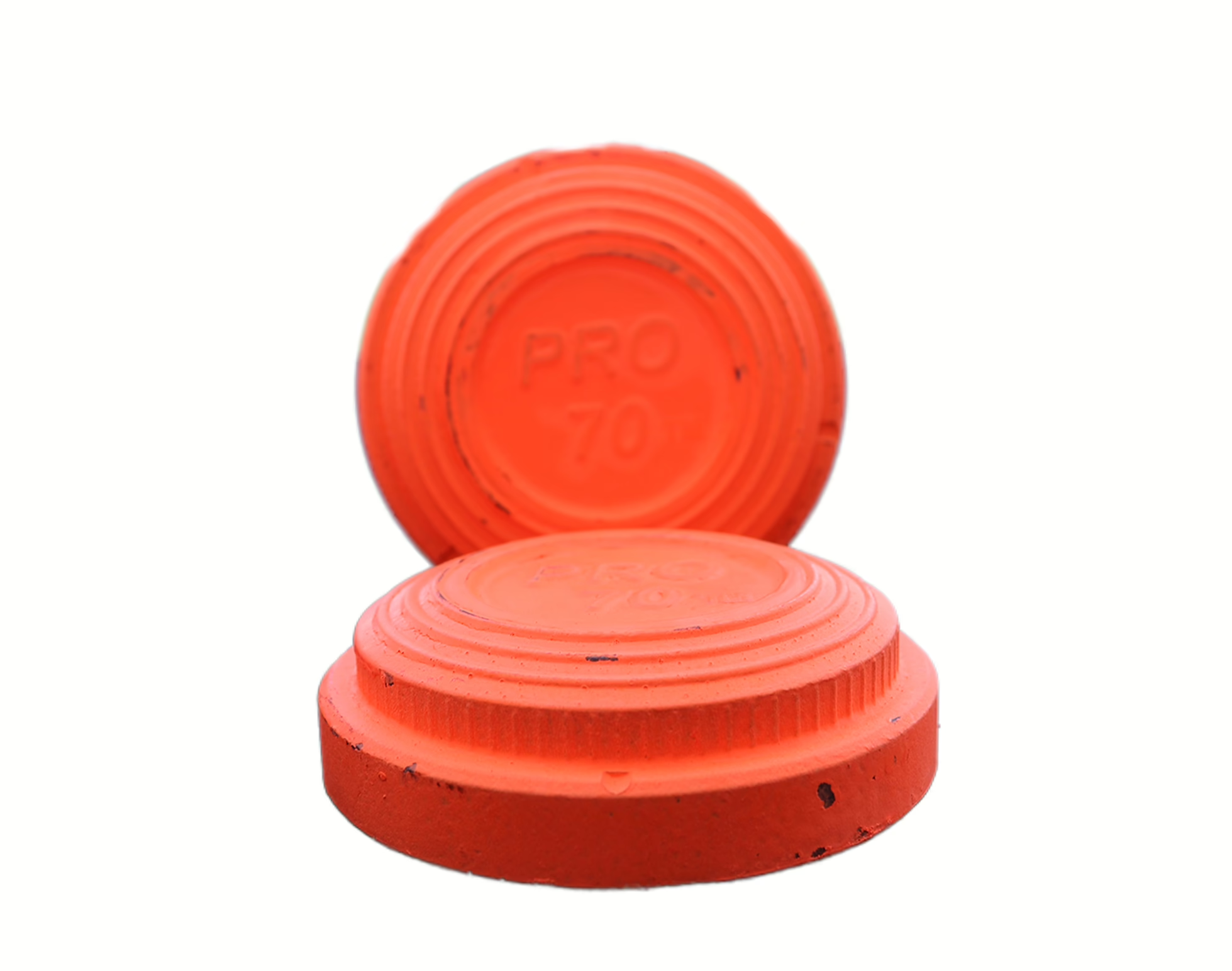
Mini targets take difficulty up another notch due to their tiny size and increased speed. These simulate fast-moving birds at close range, requiring rapid reflexes and accuracy.
Name of the element
Size:
70mm diameterName of the element
Flight Characteristics:
Flies extremely fast, making it harder to track and hit.Name of the element
Usage:
Often used in sporting clays setups for close-range shots that demand precision.
Rabbit Targets
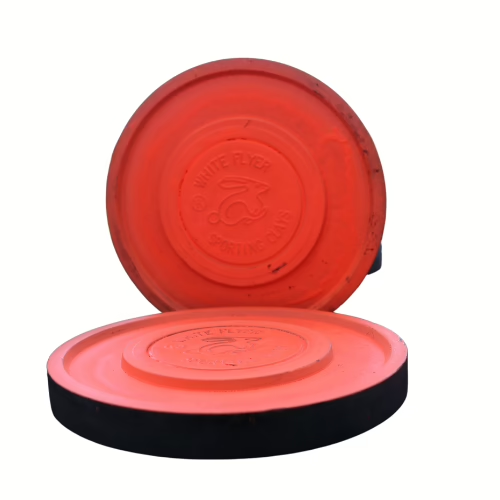
Rabbit targets differ from aerial clays because they roll along the ground, mimicking a rabbit's erratic movement.
Name of the element
Size:
Standard 108mm diameter but with a thicker, reinforced edge for durability.Name of the element
Flight Characteristics:
Rolls, bounces and skips along the ground, requiring careful tracking and quick reaction time.Name of the element
Usage:
Common in sporting clays and FITASC (Federation Internationale de Tir Aux Sportives de Chasse) to replicate ground game.
Battue Targets
Battue targets are thin, flat clays that behave very differently from standard targets. Instead of flying in a steady arc, they flip suddenly in flight and drop rapidly once they reach their peak.

Name of the element
Size:
Similar to standard targets but much thinner.Name of the element
Flight Characteristics:
Appears flat in flight, making it hard to track. Then, it drops suddenly, requiring precise timing.Name of the element
Usage:
Used in sporting clays to simulate birds diving or dropping quickly.
Choosing the Right Clay Target for Your Shooting Goals
Understanding how different clay target types behave can help you become a better shooter. Whether you’re a beginner learning to shoot standard clays or an experienced shooter refining your skills on midis, battues and rabbits, mastering a variety of targets will improve your accuracy and reaction time.
If you’re looking to test your skills, find a local sporting clays range and challenge yourself with different sporting clay target types!
Clay target shooting is an exciting challenge that tests your reaction speed, accuracy and adaptability. By learning how different sporting clays targets behave, you can sharpen your skills and become a more versatile shooter.